
The Psychology of Executive Presence

The Psychology of Executive Presence is a framework created by Erin Loman Jeck
It treats presence as an internal state leaders can train: the mental habits that keep you composed, clear and credible when the stakes are highest.
"You need more executive presence." Then nobody tells you how.
It's the most common and least useful feedback in leadership.
Talented leaders hear it right before a promotion stalls. They search for how to stay calm in the boardroom, how to speak up with senior leaders, and how to stop second-guessing themselves in the moment. Most advice answers with posture tips and power poses.
The real issue is psychological. Under pressure, the brain's threat response takes over. Your voice speeds up, your thinking narrows, and you hedge instead of deciding. That's the moment people read as "lacking presence."
The framework
Four inner shifts that change how the room sees you Presence that holds up under pressure starts on the inside. Each pillar pairs a pressure reaction with the trained response that replaces it.

Composure
to regulated calm
Recognize your stress signals early and settle your body before you speak, so pressure sharpens you instead of shrinking you.

Conviction
to grounded authority
Quiet the imposter voice, take a clear position and make the call. Decisiveness is the trait leaders notice first.

Connection
to reading the room
Move your attention off how you're coming across and onto the people in front of you. Emotional intelligence becomes visible.

Clarity
to the headline first
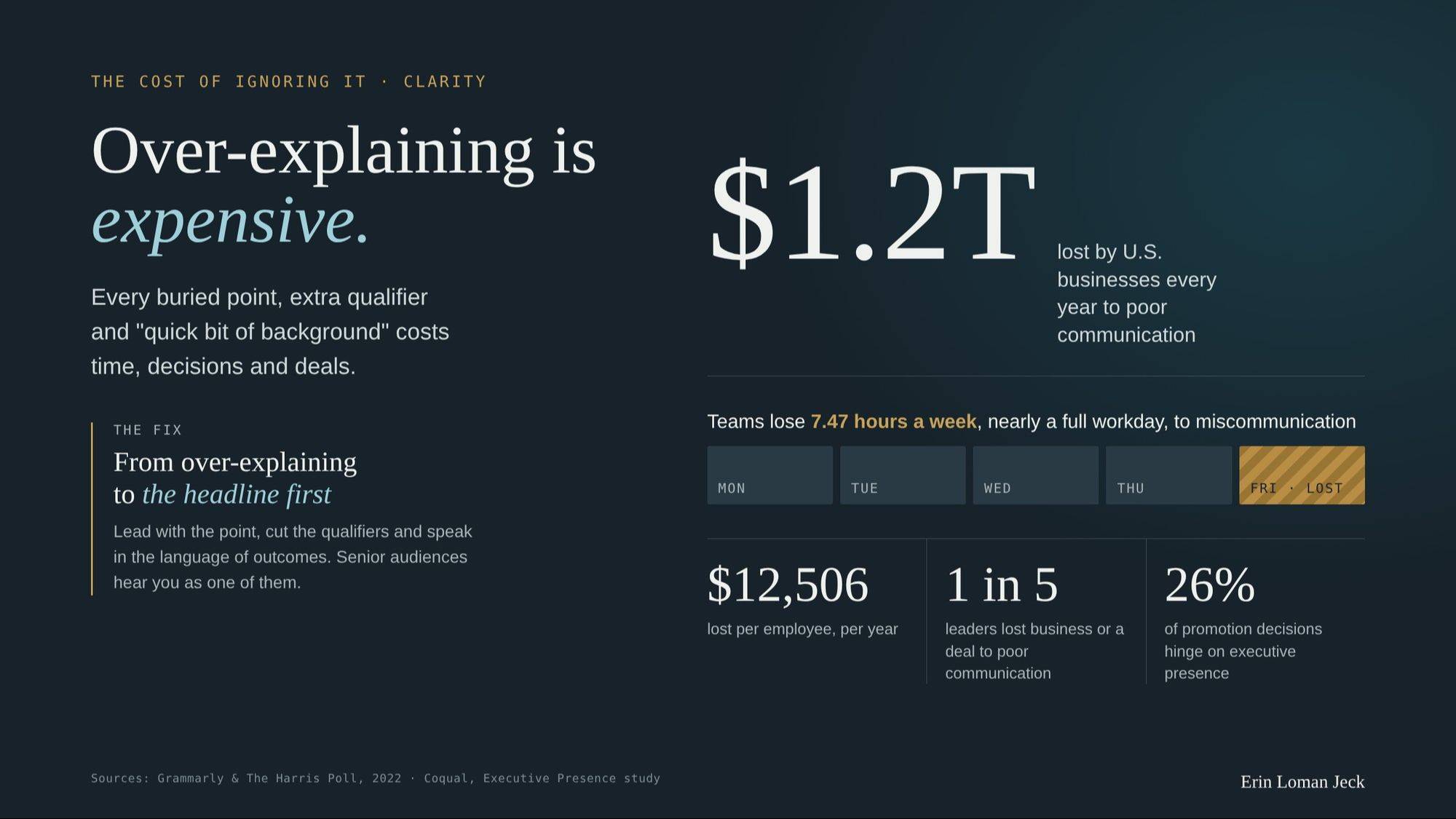
Lead with the point, cut the qualifiers and speak in the language of outcomes. Senior audiences hear you as one of them.





Work with Erin Bring The Psychology of Executive Presence to your leaders
Leaders set the emotional tone of every room they walk into. A rattled leader creates a hesitant team. Investing in the psychology behind presence is one of the most direct ways to protect your leadership bench, your culture and your results.
Keynotes
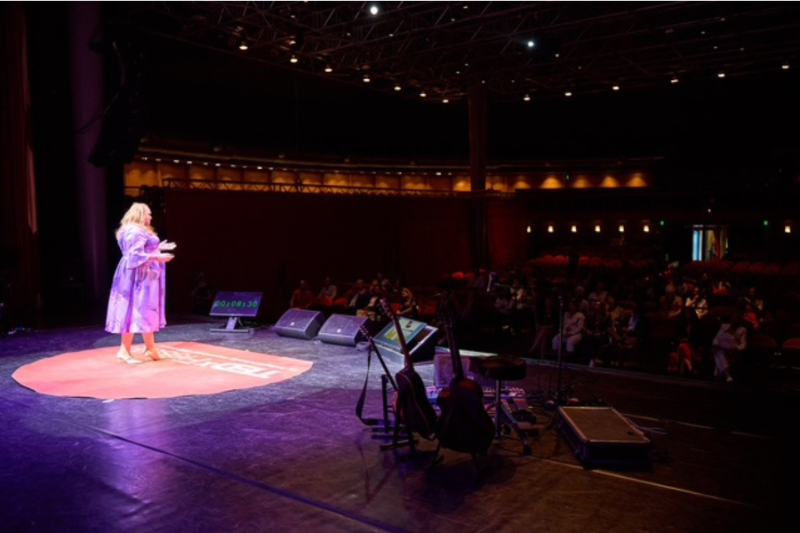
An energizing, research-backed talk that gives every leader in the room a tool they can use at their next high-stakes meeting.
45–60 minutes
In person or virtual
Leadership summits, women's leadership events, alumni programs
Workshops
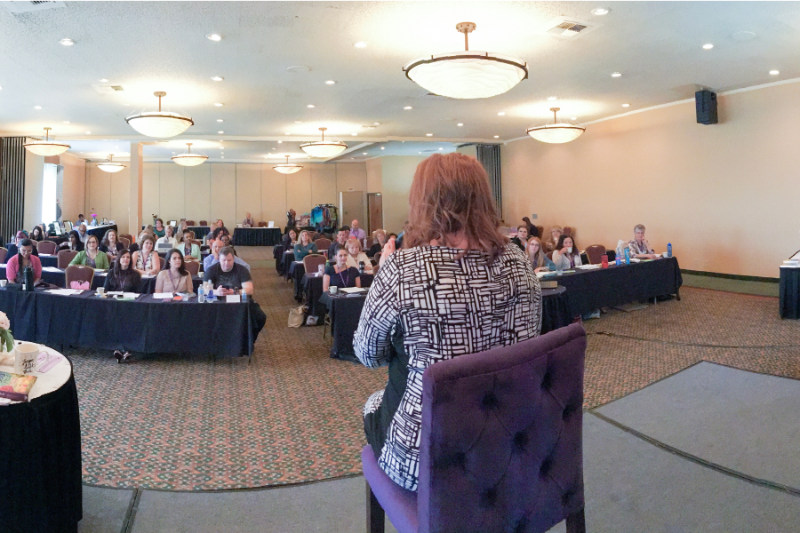
Hands-on sessions where leaders practice composure, conviction and clarity in realistic pressure scenarios.
Half-day or full-day
Emerging leaders to the C-suite
Custom to your culture
Employee Retention Groups

Executive Leadership
One-on-one work for leaders who've been told they need more presence and want a clear, private plan to build it.
Presence assessment
Communication assessment
Promotion and board-readiness
High-stakes presentation prep
Erin Loman Jeck
Erin Loman Jeck is an Executive Communication/Leaderhip Coach and the creator of The Psychology of Executive Presence. She helps leaders understand what's happening inside them under pressure and turn it into calm, credible authority.
Erin has taught executive presence to alumni audiences at universities across the United States. She shares her work through keynotes, workshops, podcasts, and articles on leadership and public speaking.

Book Call With Erin
FAQ
What is the psychology of executive presence?
The Psychology of Executive Presence is a framework created by Erin Loman Jeck. It treats presence as an internal state leaders can train: the mental habits that keep them composed, clear and credible when the stakes are high.
Who created The Psychology of Executive Presence?
Erin Loman Jeck, an executive presence speaker and coach, created The Psychology of Executive Presence.
Can executive presence be learned?
Yes. Most presence breakdowns come from the body's threat response under pressure. Leaders can learn to recognize and regulate that response, which makes composure, decisiveness and clear communication repeatable.
Why do I get told I lack executive presence?
The feedback usually points to what people see under pressure: rushing, hedging, over-explaining or going quiet with senior leaders. Research shows 81% of people who get this feedback don't know how to act on it. The framework turns that vague comment into specific skills.
What does a lack of executive presence cost a company?
Senior executives say presence accounts for 26% of what it takes to be promoted, so presence gaps stall the leadership pipeline. Poor communication costs U.S. businesses an estimated $1.2 trillion a year, and low engagement cost the global economy about $10 trillion in lost productivity in 2024.
Give your leaders presence that holds up under pressure.
- Coqual (formerly Center for Talent Innovation), Executive Presence key findings, survey of 268 senior executives.
- KPMG, Advancing the Future of Women in Business (2020), as reported by DBusiness.
- Grammarly and The Harris Poll, State of Business Communication (2022).
- Gallup, State of the Global Workplace (2026).
© 2026 Erin Loman Jeck. The Psychology of Executive Presence™ is a framework by Erin Loman Jeck.
